It all began in the summer of 2014. I was 30 years old, traveling as a worship leader for a teen girls’ conference. That summer, the tour paused, so I picked up a part-time job at a local juice bar to fill the gap until things started again. Around that time, I began noticing strange air bubbles in my stomach that wouldn’t go away. Aside from that, I felt great—honestly, probably the healthiest I had ever been.
One day at work, my stomach pain suddenly intensified. As the hours passed, it became unbearable, so I left early and went straight to urgent care. They ran several tests but couldn’t pinpoint the cause, so they referred me to a gastroenterologist. I saw him a week later. He was thorough but calm, not overly concerned. With no family history of colon cancer or gastrointestinal disease, he suspected something minor, but scheduled a colonoscopy just to be safe.
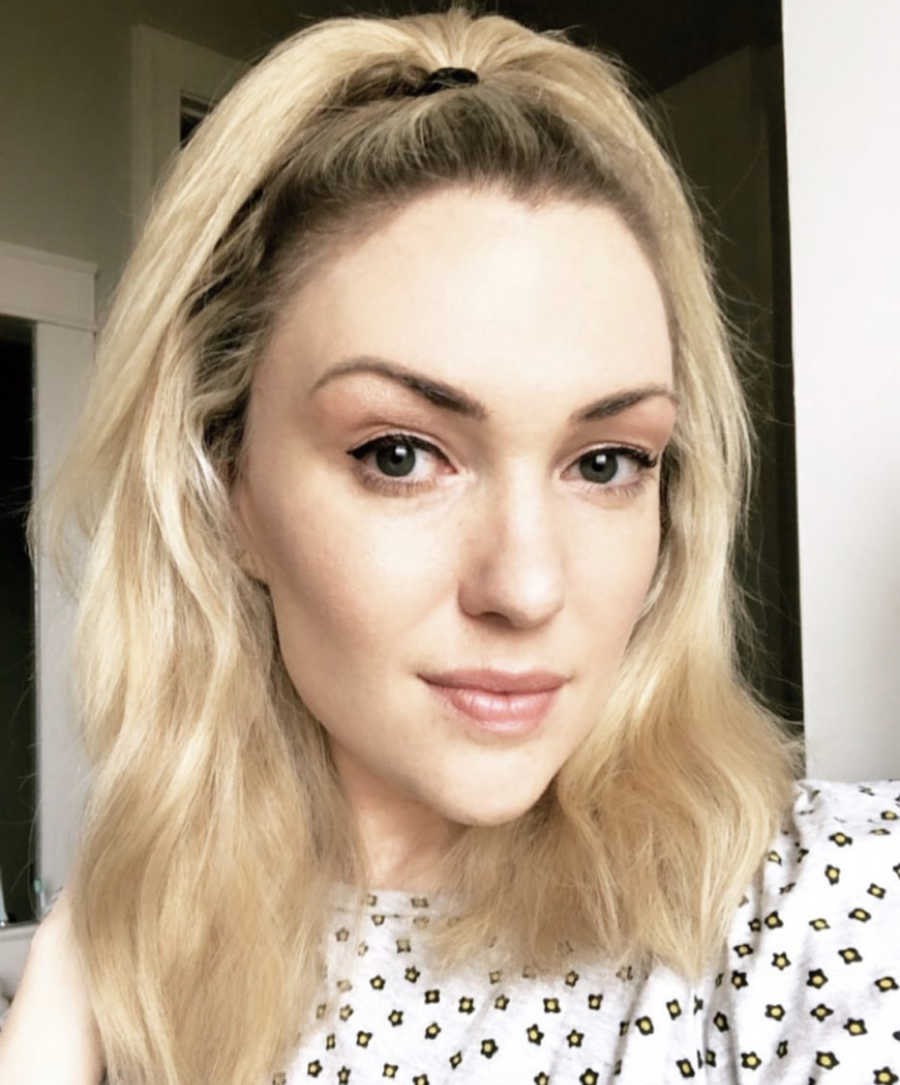
About three weeks before the procedure, I went on a first date with a guy named Reid Patterson. One date became two, then three, and by the time my colonoscopy rolled around, we were already heading toward defining the relationship. When I realized I didn’t have anyone else to take me to the appointment, I hesitantly asked Reid. I wasn’t sure we were far enough along for him to see me fresh out of anesthesia, but I didn’t have many options.
On October 14, 2014, they wheeled me back for the procedure. I remember smiling, carefree, and yelling back to Reid, “See you soon!”—thanks to the happy medicine doing its job.
When I woke up, I was alone in a dark recovery room. My thoughts wandered, but nothing prepared me for what came next. The doctor entered, pulled up a stool, and sat directly in front of me. With tears in his eyes, he said, “We found a large tumor in your rectum.”
Everything after that felt unreal. I didn’t cry. I didn’t react. It felt like I had slipped into a nightmare I couldn’t wake up from. Reid wasn’t in the room because our relationship was still new, and in that fragile moment, I was alone. The doctor explained they had already done a biopsy and warned me to prepare myself. It could be cancer, and regardless, surgery would be necessary. If it was cancer, chemo and radiation would need to start immediately.
He said the word—cancer.
I slowly got dressed, walked out to the waiting room, and asked Reid if we could leave, my face completely blank. Once we were outside, the reality crashed over me. Something was terribly wrong. I hugged him and broke down, sobbing uncontrollably. He didn’t ask questions. He didn’t push. He just held me and let me cry until I could finally whisper the word that changed everything: “Cancer.”
Normally biopsy results take a week, but my doctor rushed mine and scheduled an appointment with a surgeon just two days later. On October 16, 2014, I walked into that office terrified. I was surrounded by family, friends, and Reid, but I chose to go into the appointment alone. My heart was pounding so loudly I was sure it could be heard.
Dr. Briley examined me and handed me a pamphlet titled Dealing with Colo-Rectal Cancer. My stomach sank. Then she said the words I’ll never forget: “You have adenocarcinoma, a very common form of colorectal cancer.” I was confused, overwhelmed, and in disbelief. I was 30 years old, active, healthy—it didn’t make sense.
A CT scan revealed spots on my liver and ovaries, requiring further testing. A PET scan the next day confirmed late-stage cancer, though the spots were too small to biopsy. They also found a thyroid nodule, which they didn’t initially think was concerning. The plan was to begin chemo and radiation immediately before removing the tumor.
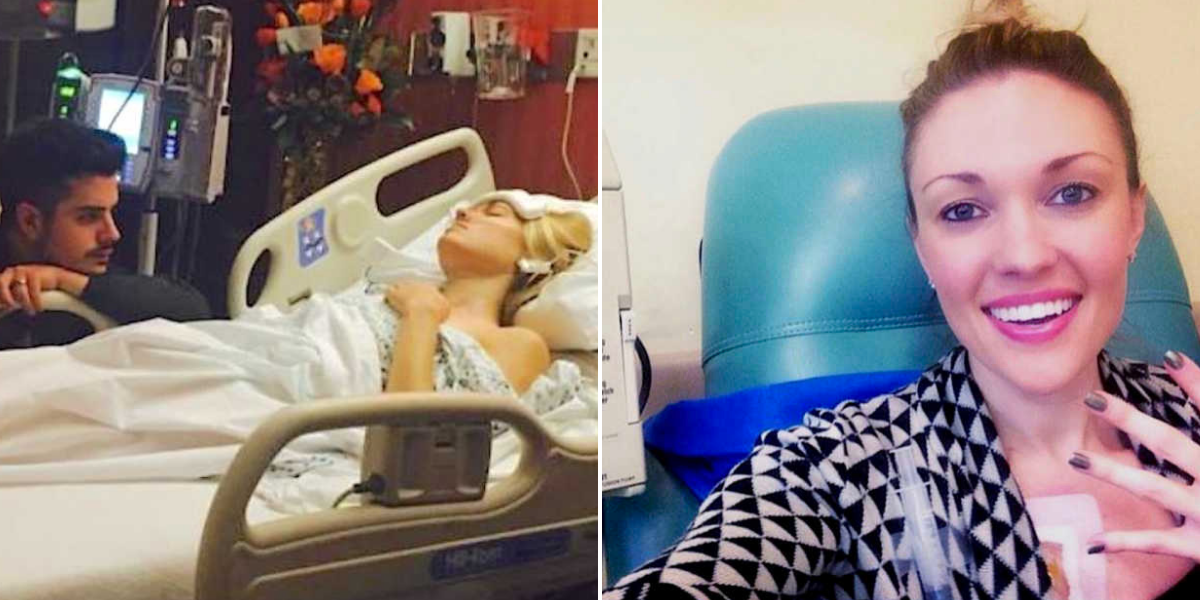
That same week, I started 24/7 chemotherapy and daily radiation treatments. In a matter of days, my entire life flipped upside down, and the side effects quickly set in.
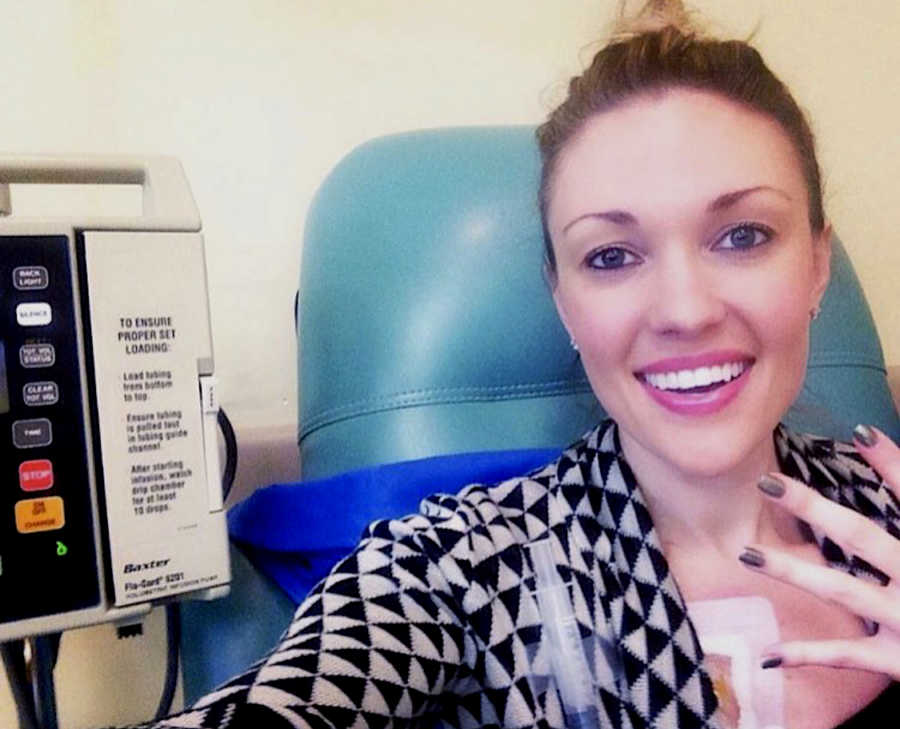
A few weeks later, doctors biopsied the thyroid nodule. Sitting in another exam room, I felt strangely calm. There was no way I could have two unrelated cancers. No way.
But when the doctor walked in, his expression told me everything. I had thyroid cancer, and it had spread to my lymph nodes. He tried to reassure me, calling it “a walk in the park” compared to colon cancer, but it didn’t feel that way. Surgery would be scheduled once chemo ended. Then came more bad news—the surgery could damage my vocal cords. There was a chance I might never sing again, and a small chance I might never speak above a whisper.
Colon cancer. Thyroid cancer. And possibly losing my voice. It was too much.
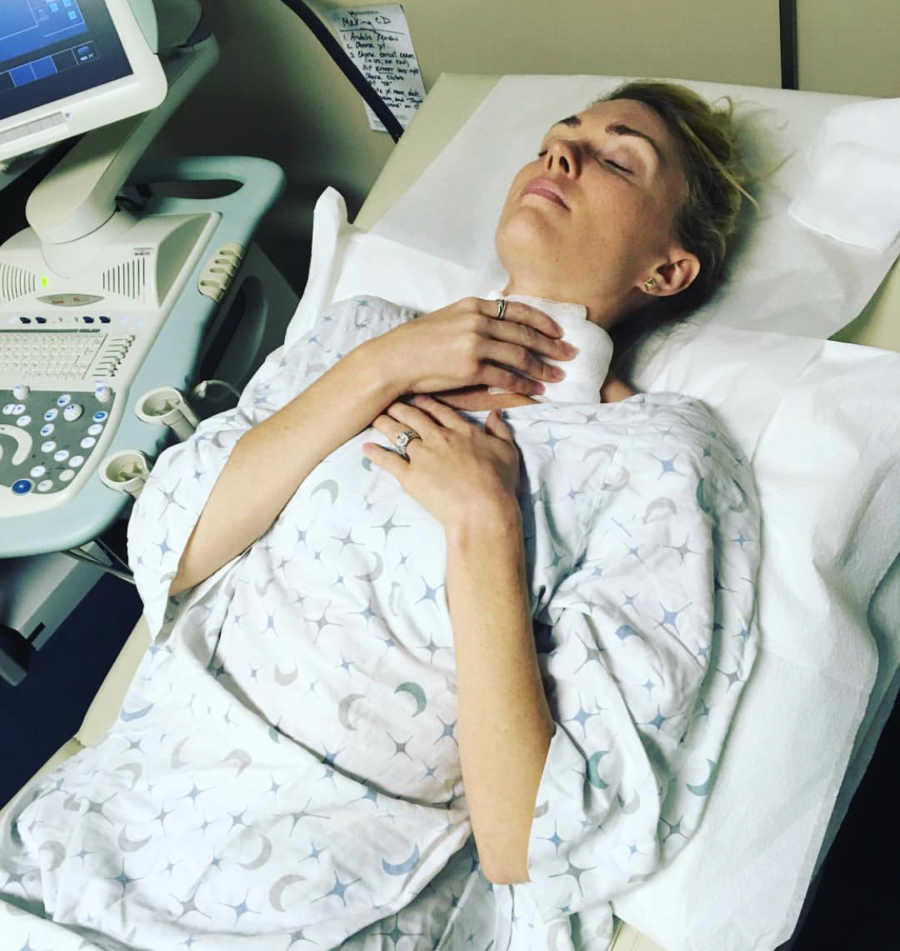
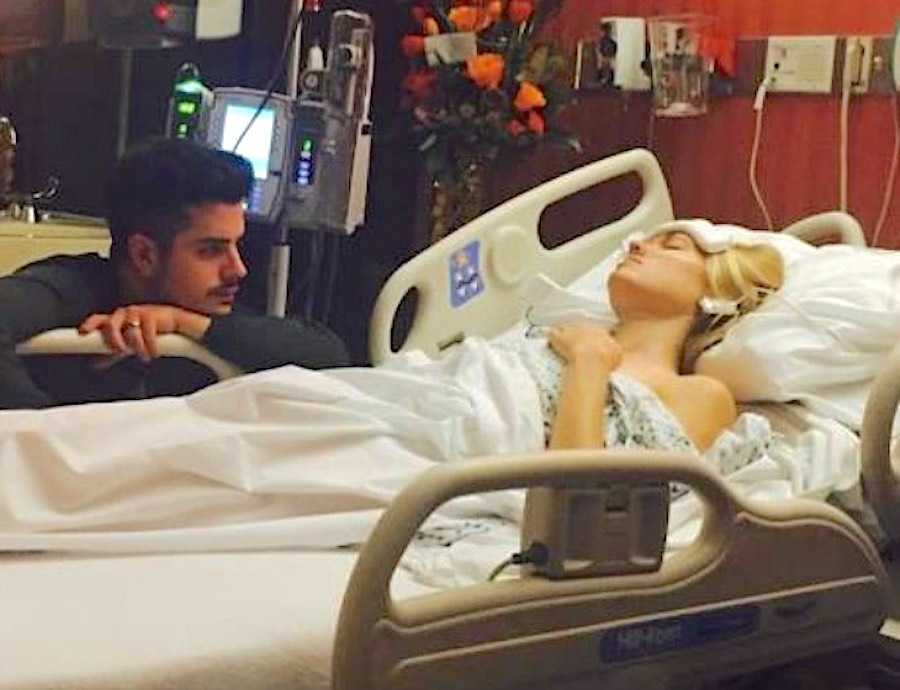
Those early weeks were overwhelming. I was exhausted, scared, uninsured, and drowning in appointments, needles, tests, and hospital gowns that left no room for dignity. I felt broken in every way—physically, emotionally, financially.
Over the next year, I endured eight months of chemo, six weeks of radiation, and five surgeries. It’s unbelievable that so much pain fits into one sentence. There were moments I didn’t think I would survive. I was weak, fragile, and fighting felt impossible—but I kept going, inch by inch, holding on to life.
In October 2015, I sat in yet another exam room waiting for my latest CT scan results. When my doctor walked in smiling and said, “Cancer free,” everything stopped. My sister Brianna, Reid, and I hugged and cried together. I had made it. I had survived.
Three weeks later, I said “I do,” with my own voice, to the man who never left my side. He carried me when I couldn’t stand and showed me what true love looks like from the very beginning.
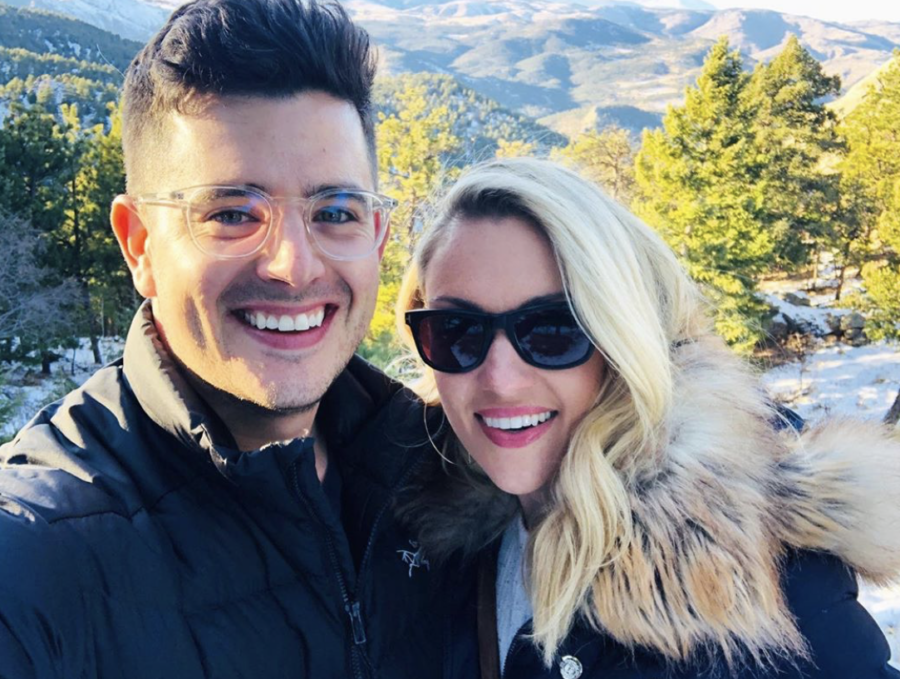
What I’ve learned most over the past five years is to hold onto hope, even in the darkest moments. God transformed my deepest pain into my greatest gift. There will be days when you don’t think you’ll make it—but days become weeks, weeks become months, and one day you’ll look back amazed at your own strength. We are all fighters. Don’t give up on hope or yourself. There is light at the end of the tunnel. I am living proof.