
My four-year-old son has had a rough week. His teachers mentioned that he’s been acting differently, and I noticed it at home too—more whining, more frustration, more moments when nothing seemed to go right.

As a parent, I try not to blame myself when my kids are struggling. But I couldn’t ignore the truth: I had been less patient, raising my voice more than usual, and saying, “I can’t play right now, Mommy’s busy!” far too often.
Today, he crawled onto my lap and cuddled me. He started whining, and I told him to use his words. And in that moment, it hit me: I wasn’t using mine.
I had forgotten to ask him if he was okay.
I had forgotten to ask how his day went.
I had forgotten to ask why he was having a hard week.
I had just…forgotten.
So I did what I often do for his older sister: I tried to make him feel special. I told him to take off his shirt and lie down. I sliced up some cucumbers and placed them over his eyes. I grabbed one of my gentle face masks and rubbed it onto his little forehead.
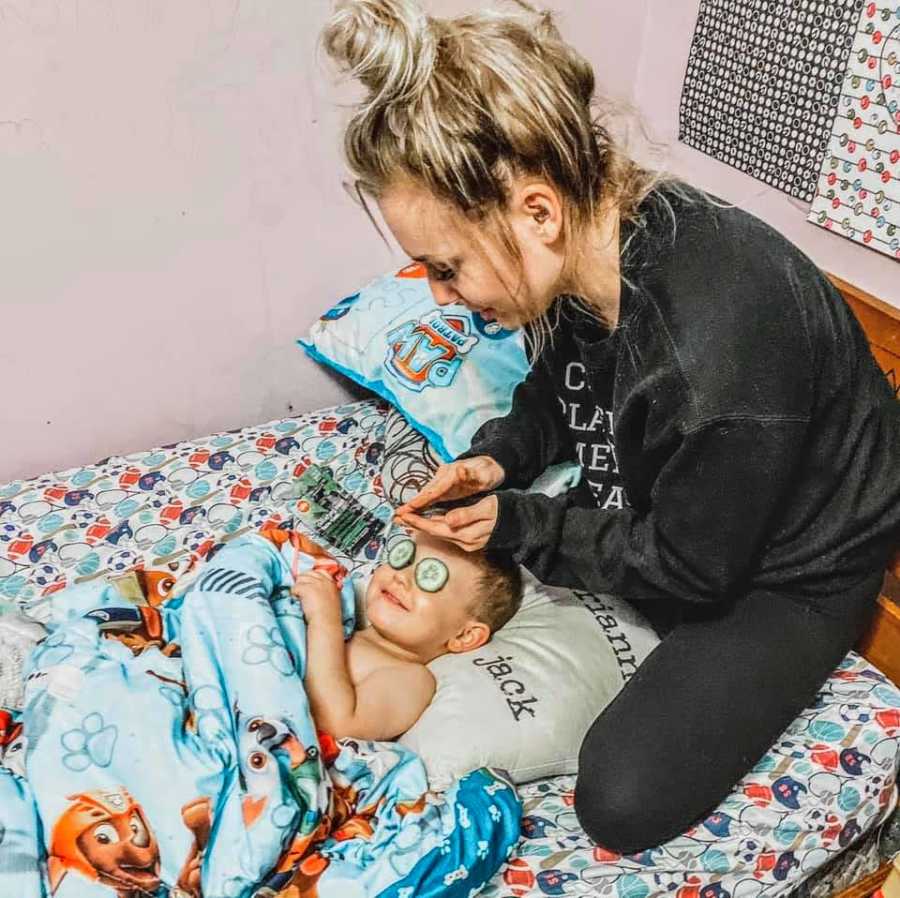
His smile appeared instantly.
I sat there on his bed, massaging his face, quietly reminding him that it’s okay to have bad weeks—and that Mommy is always here for him. Sometimes, we all need a little moment to feel better, even if it’s only for a few minutes.
Every day, I’m learning how to be a more understanding parent. Because we all need someone who sees us, hears us, and reminds us that we’re not alone—no matter our age.
I started doing this because I believe mental health conversations need to start early. Anxiety and depression don’t care if you’re five, twenty-five, or sixty-five. I grew up with anxiety and didn’t know what it was; I was just labeled “the weird kid.”
I want my kids to know that it’s okay to feel how they feel and that they are never too young to talk about their struggles. My children know I’m in therapy, and I don’t hide it from them. I want them to understand that mental health matters—and that talking about it is not only normal but necessary.