I cracked open my 8-year-old laptop and carefully nudged the fraying prongs of the charger into the outlet next to our dining room table. The poor thing had seen better days, but I felt a quiet kinship with it—we’d weathered a lot together over eight years: grad school applications, blog posts, lesson plans, and most recently, mountains of adoption paperwork.
Mountains, really. Or maybe scads. Let’s call it what it was: a buttload.
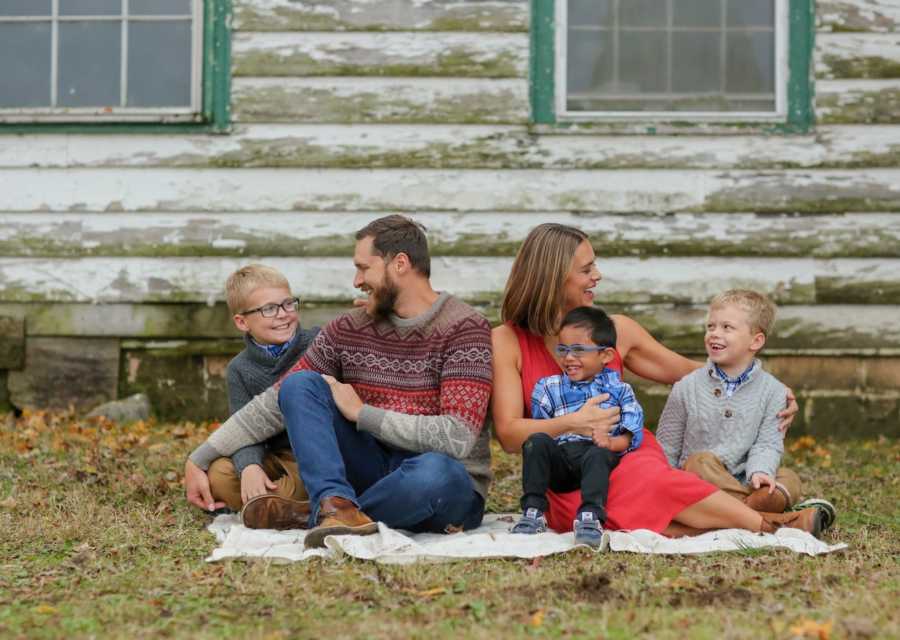
It was just before 5:30 in the morning, one of those rare, quiet moments my husband and I stole for ourselves before our older boys rose with the sun. Brian often spent the time journaling or reading, while I tapped away at my laptop—finishing an article or triple-checking every detail of bringing our three-year-old son CJ home from the Philippines.
By April 2019, we had been “expecting” for over two and a half years. I remember googling that this was about six months longer than an African Bush Elephant’s pregnancy—just one of many random distractions I tried to entertain myself with while waiting. Others included “plane ride activities for kids, 14 hours” and “beginner Filipino recipes, easy, crockpot.” None of them were particularly effective, but they kept my fingers from developing permanent calluses from refreshing the National Visa Center website every morning, hoping, praying, that today might be the day.
For months, the process had moved slowly but steadily. Our social worker’s mantra, “Hang in there!” had become both irritating and necessary. We’d done everything: classes, books, fees, even my leave of absence from my work as a speech-language pathologist. But suddenly, after months of routine progress, the Philippines went silent. CJ had been taken to his final visa medical appointment in Manila, and weeks ago, we should have been on our way to bring him home. Yet morning after morning, the NVC website greeted me with the same soul-crushing word:
“Pending.”
“Pending.”
“Pending.”
Then, one morning, I typed in CJ’s case number and froze. It didn’t say “Pending” anymore. It said:
“Refused.”
Bold, blue letters. The sting of two and a half years of waiting burned through me. I hit refresh, convinced it had to be a mistake. Surely, a clerical error. The “more information” link sent me to a hotline, but no human would answer for hours.
Questions flooded me: Why would the U.S. government deny a three-year-old a visa? Didn’t they see all he’d been through? Didn’t he belong with us?
I spun my laptop toward Brian, and we tried to make sense of it. Ever the optimist, he tried to calm me, but I went into full panic mode, texting and emailing anyone who might help. By 9 a.m., I was on the phone with our social worker, equally stunned but determined to find answers. Surely it was a mistake, right?
And then… we waited.
It was early Easter week, and spending the holiday with part of our family missing felt unbearable. So we cashed in some frequent flyer miles and flew from Nashville to Boston to be with my family. After days of Cadbury Eggs and casserole, we returned home feeling slightly recharged and ready to tackle the next leg of our adoption journey.
On the plane back, buckling in next to our four-year-old Archie, my phone vibrated in my purse. Sue, our social worker, was calling.
“Hi Kelly, I heard back from ICAB,” she said. My heart sank. I knew this wasn’t going to be the call that ended with secret good news and a celebratory group text.
“I hate to tell you this,” she continued. “CJ’s visa was denied because he tested positive for Primary Koch Infection.”
“Primary…what?” I asked, trying to tune out the passenger overhead wrestling her oversized carry-on.
“Tuberculosis. To be eligible for a visa, CJ must move to a new orphanage in Manila and receive daily antibiotics for six months.”
Six months. To me, it felt like a lifetime. I thought of elephants tending to their calves. I hung up and whispered to Brian, “CJ has $%&-ing tuberculosis.*” He nodded, helpless but trying to remain calm for our older boys. I held Archie’s hand, crying quietly while playing Eye Spy, tears balanced on the rim of my eyelids.
The next months were a storm of emails, calls, and letters. We learned that CJ’s treatment couldn’t begin immediately due to insufficient staffing at the orphanage. Nearly three months later, he was still not closer to coming home.
Determined, we took matters into our own hands. We petitioned the U.S. government for a waiver, developed a stateside treatment plan with the health department, and consulted adoption attorneys, pediatricians, and even senators’ offices. Our team was all-star, yet the weeks dragged on. By August, each promising avenue seemed to hit a dead end.
I found myself anticipating a reprieve—quiet hours after sending Oliver and Archie off to school. Maybe I could write, exercise, or finally tackle my podcast queue. For the first time, it almost sounded appealing.
But the week before school started, I paused in the morning to pray. I’d been distant from God, frustrated at a timeline I didn’t control. That morning, sunlight streaming through the trees, I whispered the first real prayer in months: “Let your will be done. Whatever it is, I’ll be okay.”
Hours later, Sue called. “I just got a notice—CJ is flying to Manila for another visa medical appointment.”
Neither of us understood it. Why now, after nearly six months of inactivity? Our careful advocacy seemed to have made no difference, yet ICAB was acting. We resolved not to get our hopes up—but allowed a flicker of optimism.
Later, in the shower, it hit me: the NVC website. Sopping wet, I grabbed my phone. My stomach lurched. The page loaded:
“Issued.”
Our son was coming home.
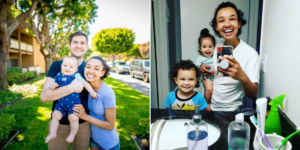
In just a few weeks, Brian and I flew to Leyte to meet CJ. The moment was expansive, intimate, and overwhelming all at once. CJ immediately gravitated toward Brian, calling him “Dada.” I had to work harder, crawling on the floor with dramatic peek-a-boo games to win his trust.
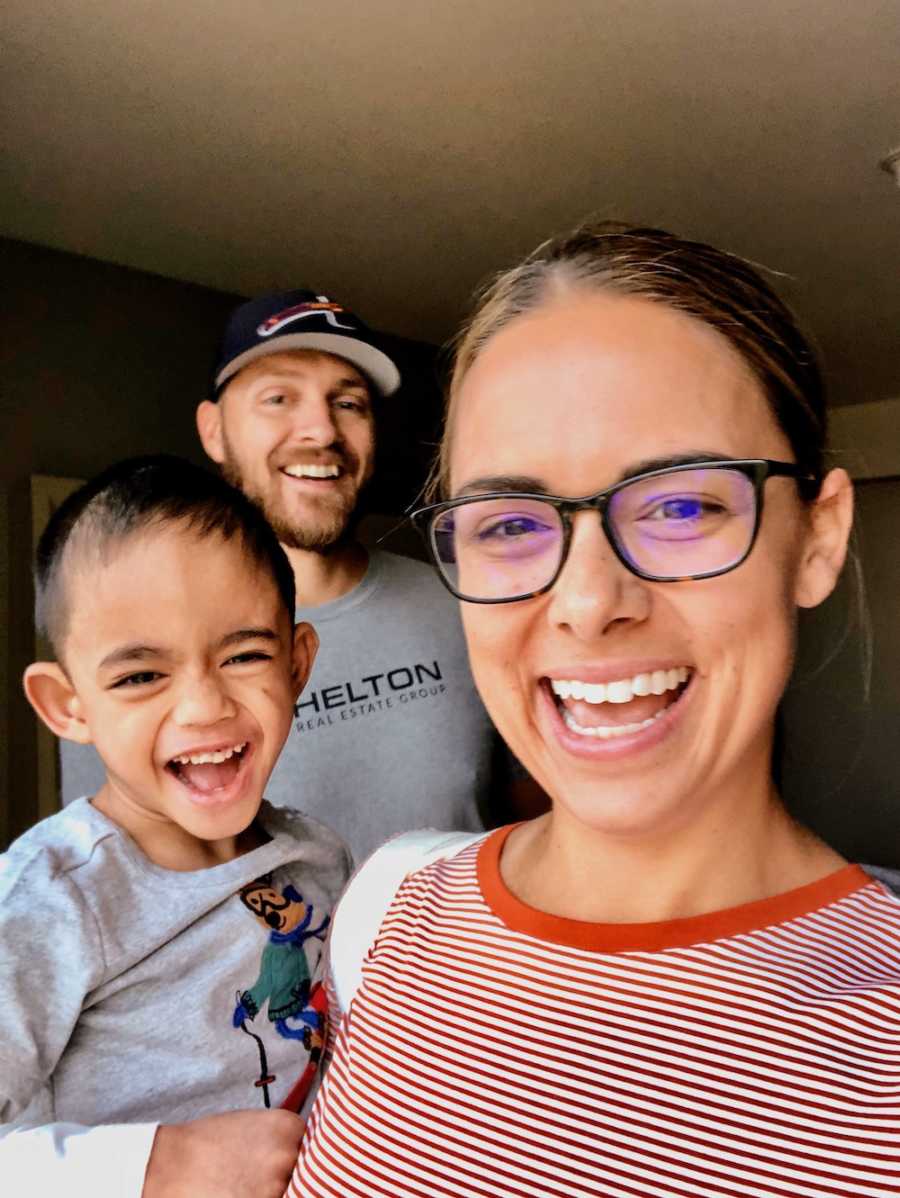
CJ was gentle, confident, and playful. He loved Chicken Adobo and Congee, was picking up American Sign Language, and had a smile as wide as the ocean that had separated us. After a week, the three of us flew 20 hours back to Nashville, finally beginning life together as a family of five.
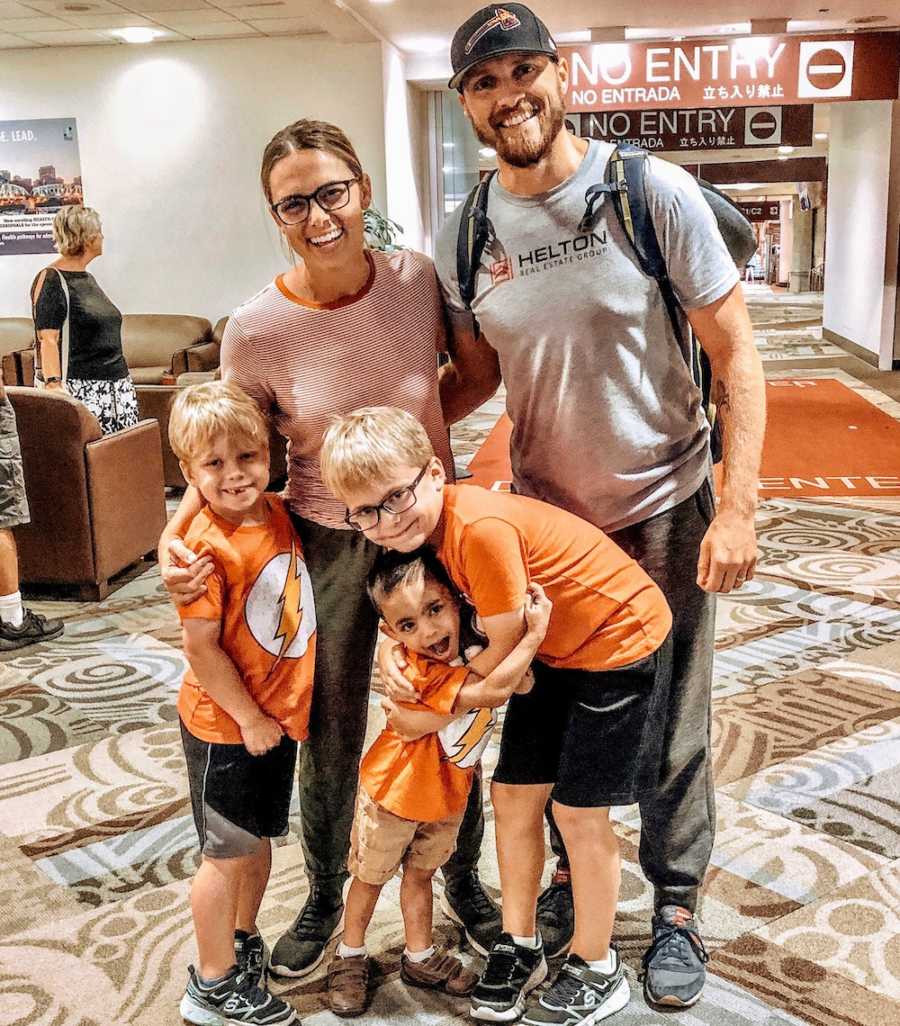
We never fully learned why CJ’s visa status changed so suddenly. The orphanage later confirmed he had never had active tuberculosis—a single misread X-ray had caused months of unnecessary delay.
I may never know the why behind it all. But whenever I feel frustrated at lost time or stalled plans, I remember that everything shifted the day I finally released my grip and let life unfold.
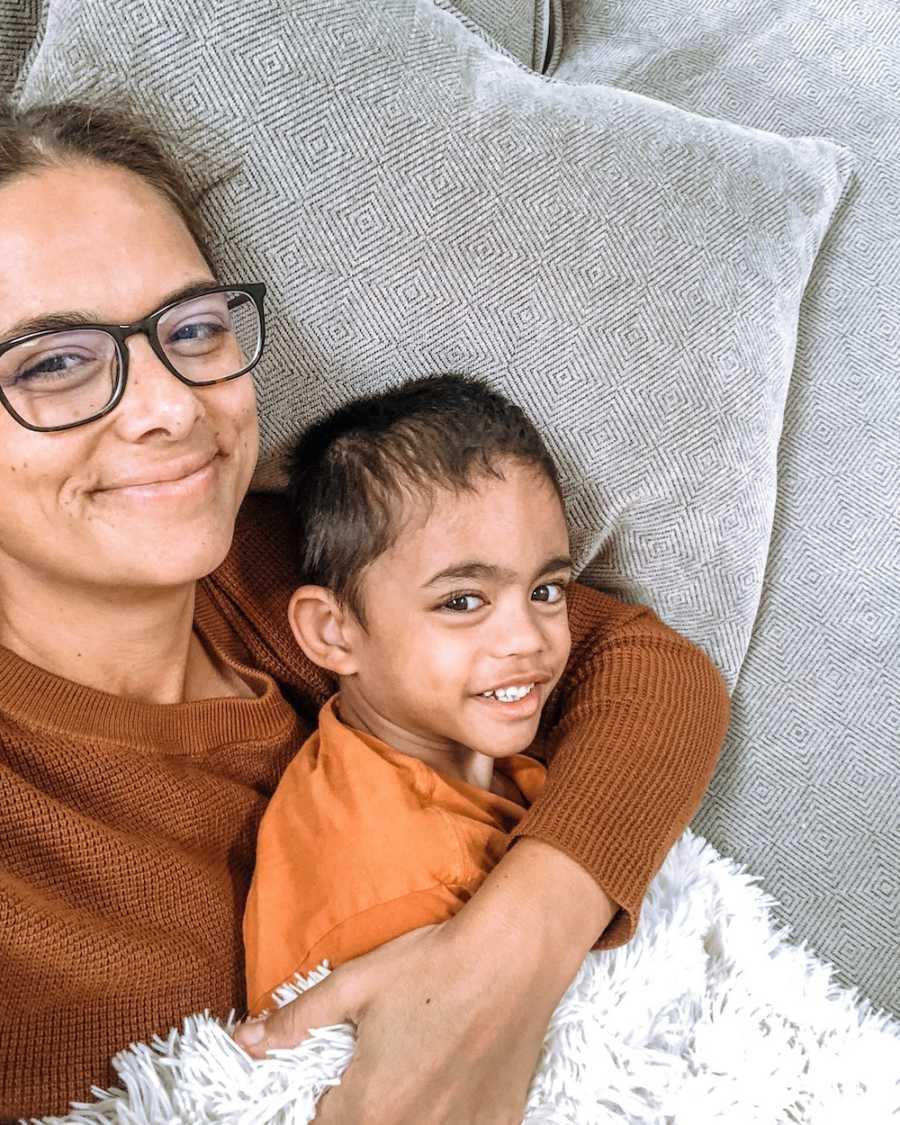
It’s not always easy. But sometimes, when the morning sun hits just right, letting go feels exactly like coming home.